UNDERSTANDING LEADERSHIP
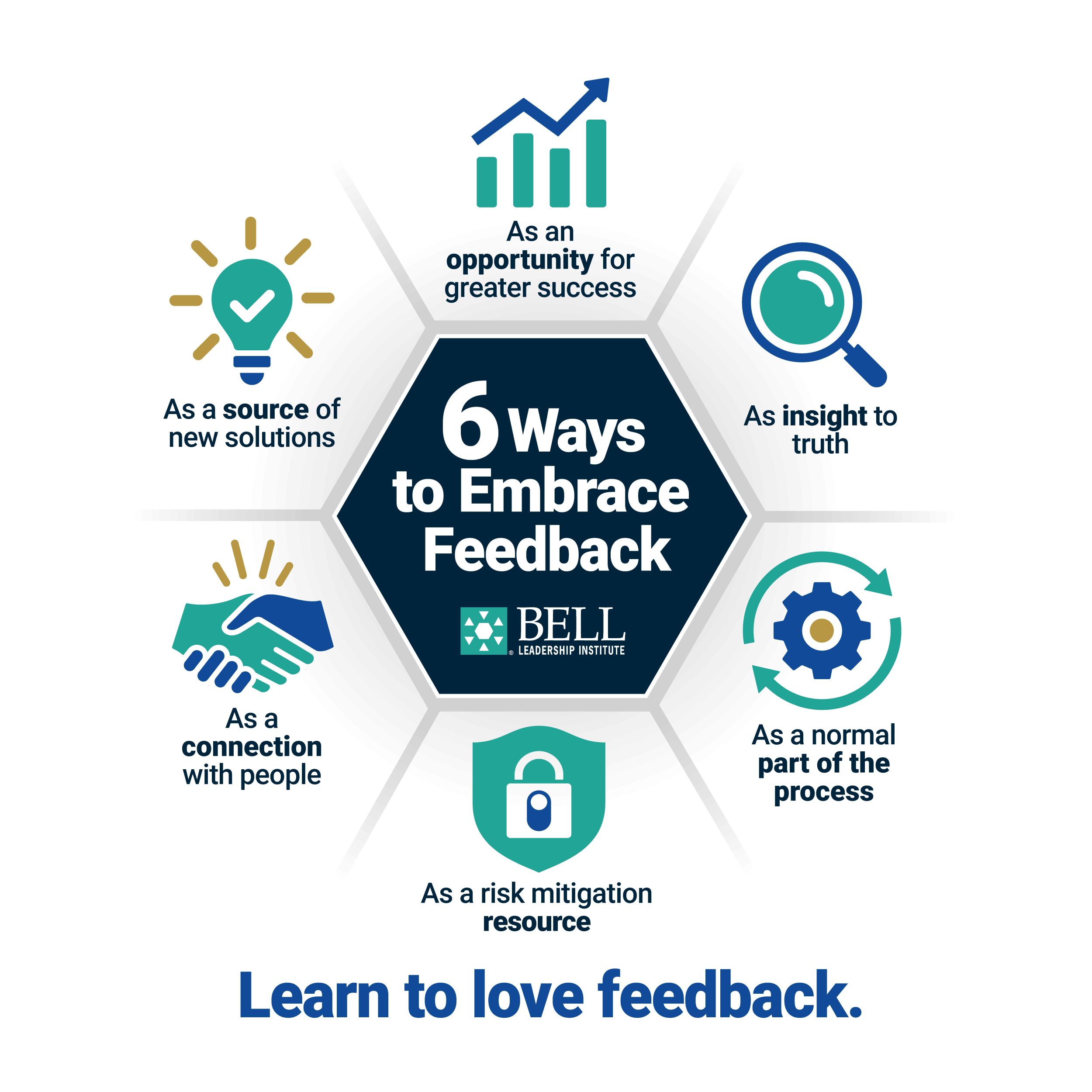
6 Ways to Embrace Feedback
Feedback is the shortest path to becoming more effective – personally and professionally.
“I love feedback!” has been a Bell Leadership Institute mantra since our founding because we know that being able to accept and utilize feedback productively is one of the most successful ways to build ourselves and our leadership skills.
Feedback is the shortest path to becoming more effective—personally and professionally. But knowing this doesn’t make embracing feedback any easier. Just the thought of receiving feedback tends to put anyone on the defensive.
Changing your point of view on feedback can help make the process more palatable. Here are 6 ways to look at feedback that can help you more fully embrace it:
About
Mastering the art of non-defensiveness takes dedication and practice, but the benefits of feedback make it well worth pursuing.
1. As an opportunity for greater success.
If you are oriented towards your goals, then you know that the more feedback you receive, the better your outcomes will be for all of those involved. If something isn’t working well, you want to know about it because otherwise it could end up derailing or being an obstacle to your achievement.
2. As insight to truth.
Receiving honest feedback will allow you to see the truth of your situation. Achieving great results comes from validating your work each step of the way, and your colleagues and associates may have different vantage points that allow for a different perspective to illuminate something you might have missed.
3. As a normal part of the process.
Making a specific space in your to-do list for receiving feedback will ensure its inclusion as an essential step in everything you do. Once you are in the habit of including this feedback step, it will feel natural and can take the pressure and defensiveness out of the situation.
4. As a risk mitigation resource.
When others provide you with feedback, see it as their way of helping you avoid potential roadblocks. The more feedback you receive, the more likely you are to prevent mistakes and catch errors before they jeopardize your goal. Being calm and receptive to feedback means you’ll get more natural insights, forming a virtual safety net and support system around everything you do.
5. As a connection with people.
Working up the nerve to share constructive feedback is often no small effort. If someone has taken the time and energy to share their thoughts with you, they are demonstrating a willingness to connect at a deeper level. Welcoming their insights and partnering with them on solutions brings you and your team together for good and creates an environment of trust.
6. As a source of new solutions.
Hearing from different voices and exploring different ideas leads to new perspectives you can use. By allowing others to share their feedback with you, you are welcoming new, creative paths toward your goal. And the more you open yourself to feedback, the more possibilities will become available to you.
Exploring these six viewpoints on feedback can promote more effective discussions across your teams and organization. Once you start reaping the benefits of feedback, you can easily grow to welcome and ultimately enjoy the process. Mastering the art of non-defensiveness takes dedication and practice, but the benefits of feedback make it well worth pursuing.
How do you typically respond to feedback? For over 50 years, Bell Leadership has been helping leaders understand their strengths and growth areas. If you or members of your team struggle with receiving feedback, our Advanced Communications program offers practical insights to turn it into a powerful tool. Register today for an upcoming session.
Talk to a Bell Leadership expert.
Ready to dramatically improve your leadership results like so many of our clients?
Recent News and Insights

TRAINER TALK / Susan Gisler
Trust is built through ongoing small interactions that shape whether people feel safe bringing you the truth. Listening is a critical skill in developing that feeling of safety. In this article, we’ll explore that connection, and the ways strengthening the ability to listen can give leaders access to the information they most need to hear.

The Gap in the Leadership Mastery Ladder
The transition from functional leadership to enterprise leadership requires more than years of experience or greater responsibility. It requires a different level of mastery: the ability to see beyond one function, navigate competing priorities, challenge assumptions, and make decisions with the broader organization in mind. This article explores the gap that can emerge as next-generation leaders approach the executive level and examines how organizations can create the conditions that help leaders make that shift.

Your Strengths Are Not Enough
Your strengths may help you succeed, but your weaknesses often determine how far you can go. In this article, Bell Leadership examines the hidden patterns that limit leadership effectiveness, why even strong leaders can be held back by a single recurring behavior, and how a balanced approach to development creates lasting change. Discover why great leaders don’t ignore their weaknesses; they learn how to manage them.