FEATURED ARTICLE
How to Maximize Your Time in Alpha
(In a World Constantly Pulling Us Towards Beta)

About
Most leaders understand the value of focused effort, what we call “alpha state.” What may be illuding them is how to achieve that level of focus in a world that increasingly pulls toward distraction, what we call “beta state.” Interestingly, the answer may lie in our personalities. In this article, we’ll explore six different approaches to enabling more time in alpha state and minimizing the pitfalls of beta.
Alpha is when we are fully engaged. Our intention is clear, and we are able to direct our attention toward meaningful work. It is where insight happens, decisions sharpen, and progress accelerates.
Beta, by contrast, is scattered and reactive. It is characterized by constant task-switching, interruptions, and a sense of busyness without meaningful movement.
The challenge for leaders today is not understanding the value of alpha. It is maintaining it in an environment that increasingly pulls us toward beta.
Why Alpha Is Getting Harder to Find
The modern work environment is not neutral. It actively works against sustained focus.
A typical day now includes a steady stream of emails, messages, and notifications. Meetings stack up with little transition time. Expectations of responsiveness are immediate. Priorities compete, often without clear resolution. At the same time, there is constant exposure to external information—industry updates, market shifts, and global events.
None of these are inherently negative. In many cases, they are necessary. But together, they create a pattern of fragmentation that is difficult to overcome.
At Bell, we often refer to these interruptions, both external and self-generated, as “beta bombs.” A beta bomb is anything that breaks your focus and pulls you out of alpha. Some are obvious, like a notification or an unexpected disruption. Others are more subtle, like checking email in the middle of a task or shifting attention before finishing what you started.
Even brief interruptions carry a cost. It can take several minutes to fully regain focus after a disruption, and often the depth of thinking is not fully recovered. Over the course of a day, these small moments accumulate and fundamentally change the quality of our work.
The Multitasking Illusion
In this environment, many leaders have come to see multitasking as a strength. It feels productive to move quickly between tasks, to respond in real time, and to keep everything in motion.
In reality, what we call multitasking is almost always task-switching.
Each time we shift attention, there is a reset. The brain has to reorient, re-engage, and rebuild context. That process may happen quickly, but it is not free. It shows up in subtle ways, like reduced clarity, lower quality thinking, and increased fatigue over time.
What feels like efficiency is often the opposite. Multitasking creates the appearance of progress while quietly slowing us down.
Alpha state requires something different. It requires sustained attention on one meaningful task at a time. When we are able to stay with a problem, a decision, or a piece of work long enough to fully engage with it, the quality of thinking changes. The outcome improves as well; more thoughtful work leads to fewer mistakes and less time wasted.
In a world filled with beta bombs, that level of focus is becoming increasingly rare.
Personality and the Path to Alpha
While the environment plays a significant role in our ability to achieve and sustain alpha, it is only part of the equation. An equally powerful factor is how each of us naturally approaches our work.
There are some foundational steps that apply to everyone. Reducing obvious distractions, silencing notifications, protecting blocks of uninterrupted time, and limiting unnecessary task-switching are all essential. Without these, it is difficult to access alpha at all.
But for most leaders, this is where progress stalls. Even after removing the most visible beta bombs, many still find it difficult to sustain focus for long periods of time. This is where personality becomes critical.
From decades of research, we know that personality is a primary driver of behavior. It influences what captures our attention, what distracts us, what energizes us, and how we choose to structure our time. It also shapes the habits we develop—both effective and ineffective.
The starting point is not a new tool or system. It is a deeper understanding of yourself. When you know what drives your focus and what pulls you off track, you can begin to design your work in a way that supports sustained attention.
There is no single path to alpha. But there are consistent patterns in how people most naturally access and sustain it.
Six Practical Ways to Find More Focus
Different people access motivation to focus in different ways. The goal is not to adopt all of these approaches, but to recognize which one or two most naturally align with how you work best and to understand how to use that pattern intentionally, rather than letting it work against you.
- Vision and Forward Movement
Those who are energized by opportunity and big-picture thinking tend to reach alpha when they have space to think ahead and move ideas forward. Their focus is strongest when they can see progress and momentum.- Block uninterrupted time specifically for forward-looking, strategic thinking
- Work in focused sprints with clear objectives and endpoints to build and sustain momentum
- Protect peak thinking time from interruptions and reactive work
- Capture ideas quickly in a trusted system to prevent distraction and mental overload
- Periodically refocus on what matters most to avoid drifting into too many parallel ideas
- Personal Standards and Excellence
Some individuals find focus when their work reflects a high personal standard. Clarity about what “good” looks like sharpens their attention, but can also create pressure that slows progress if not managed.- Define the purpose and desired outcome clearly before starting
- Establish a standard for “high quality” that is appropriate for the task, not perfection
- Structure the environment to minimize distractions that compromise the quality of work
- Build in checkpoints to assess progress rather than continuously refining
- Periodically ask, “Is this level of effort improving the outcome, or delaying completion?”
- Structure and Completion
For those who value productivity and tangible output, alpha is best supported by clear structure and visible progress. Focus builds as work is broken down and completed.- Break work into specific, actionable steps with clear definitions of completion
- Use time blocks with defined start and end points to create urgency and containment
- Track progress in visible ways to reinforce momentum and accomplishment
- Focus on one defined task at a time, resisting the pull to start new items prematurely
- Prioritize completion ahead of over-refinement to maintain forward movement
- Consistency and Order
For some, focus depends on a stable and predictable environment. Routine and preparation create the conditions for sustained engagement, though over-preparation can become a barrier to starting.- Establish consistent routines and environments that signal it is time to focus
- Prepare enough to feel ready and confident, then begin before preparation becomes avoidance
- Reduce environmental distractions that disrupt rhythm and continuity
- Protect focused work time from unexpected interruptions whenever possible
- Use repeatable processes to reduce design fatigue and maintain steady progress
- Connection and Contribution
Some individuals are most engaged and focused when their work is clearly connected to others and to shared goals. Meaning and alignment drive their attention.- Clarify how your work contributes to team goals and the success of others
- Align on priorities and expectations before beginning independent work
- Use collaboration intentionally, not continuously, to support rather than interrupt focus
- Limit unnecessary communication loops that create distraction without adding value
- Reconnect to the broader purpose of the work to sustain motivation during independent tasks
- Curiosity and Exploration
For those who are naturally imaginative and idea-driven, alpha often emerges through curiosity and discovery. Their challenge is not generating ideas, but channeling them into meaningful progress.- Allow space for open-ended thinking, intentionally alternating between exploration and execution
- Use light structure to move ideas into action, such as defining the next step, setting a short time boundary, or outlining key points
- Capture insights consistently to maintain momentum and avoid losing valuable ideas
- Use brief physical movement, such as walking or stretching, to reset energy and sustain creative thinking
Steps to Move from Beta to Alpha
Moving from beta to alpha does not require a complete overhaul. It starts with a few focused shifts in how you approach your time and work.
Step 1: Build Awareness
Most leaders overestimate how much time they spend in a focused, engaged state.
For the next few days, simply observe. At the end of each day, give yourself a rough estimate of what percentage of your time was spent in alpha versus beta. Notice when you were fully engaged, when you were reactive, and what pulled you off track.
There is no judgment in this step. The goal is to see clearly where your time is actually going.
Step 2: Reduce the Most Obvious Beta Bombs
Identify the interruptions that most consistently disrupt your focus and begin to reduce them.
Silence unnecessary notifications, protect blocks of uninterrupted time, and limit task-switching. Many distractions are self-generated, so small, intentional changes can make a meaningful difference.
You are not trying to eliminate all distractions, but to create conditions where sustained
focus is possible.
Step 3: Work With Your Natural Motivations
Review the six approaches to finding alpha and identify the one that most naturally aligns with how you are motivated to work.
From that approach, select one or two specific changes and apply them to how you structure your time and tasks. This might involve how you block your time, how you start your work, or how you maintain momentum.
When your approach to work aligns with how you naturally focus best, alpha becomes easier to access and sustain
A Rare Advantage
The ability to focus deeply is becoming a significant competitive advantage because it is increasingly uncommon.
Many organizations are unintentionally structured in ways that reinforce beta. Constant communication, frequent interruptions, and a bias toward immediacy make it nearly impossible for people to engage in sustained, high-quality thinking.
When individuals begin to spend more time in alpha, the impact is noticeable. Over time, these individual gains compound at the organizational level. As individuals better understand how they work and what supports their focus, they are able to operate more intentionally. Leaders who recognize this can also begin to shape environments that support this kind of intentionality across their teams.
Leaders who stand out will not be those who manage the most activity; they will be the ones who consistently direct attention toward what matters most, and who help others do the same.
Leaders today are not short on effort. Most leaders are, in fact, working harder than ever. What’s becoming increasingly scarce is the ability to work in a truly focused, productive mental state. At Bell, we describe this as the difference between alpha and beta. These are not technical or clinical definitions, but rather practical terms we use to describe two very different ways of working and thinking that we consistently observe in leaders.
Alpha is when we are fully engaged. Our intention is clear, and we are able to direct our attention toward meaningful work. It is where insight happens, decisions sharpen, and progress accelerates.
Beta, by contrast, is scattered and reactive. It is characterized by constant task-switching, interruptions, and a sense of busyness without meaningful movement.
The challenge for leaders today is not understanding the value of alpha. It is maintaining it in an environment that increasingly pulls us toward beta.
Why Alpha Is Getting Harder to Find
The modern work environment is not neutral. It actively works against sustained focus.A typical day now includes a steady stream of emails, messages, and notifications. Meetings stack up with little transition time. Expectations of responsiveness are immediate. Priorities compete, often without clear resolution. At the same time, there is constant exposure to external information—industry updates, market shifts, and global events.
None of these are inherently negative. In many cases, they are necessary. But together, they create a pattern of fragmentation that is difficult to overcome.
At Bell, we often refer to these interruptions, both external and self-generated, as “beta bombs.” A beta bomb is anything that breaks your focus and pulls you out of alpha. Some are obvious, like a notification or an unexpected disruption. Others are more subtle, like checking email in the middle of a task or shifting attention before finishing what you started.
Even brief interruptions carry a cost. It can take several minutes to fully regain focus after a disruption, and often the depth of thinking is not fully recovered. Over the course of a day, these small moments accumulate and fundamentally change the quality of our work.
The Multitasking Illusion
In this environment, many leaders have come to see multitasking as a strength. It feels productive to move quickly between tasks, to respond in real time, and to keep everything in motion.
In reality, what we call multitasking is almost always task-switching.
Each time we shift attention, there is a reset. The brain has to reorient, re-engage, and rebuild context. That process may happen quickly, but it is not free. It shows up in subtle ways, like reduced clarity, lower quality thinking, and increased fatigue over time.
What feels like efficiency is often the opposite. Multitasking creates the appearance of progress while quietly slowing us down.
Alpha state requires something different. It requires sustained attention on one meaningful task at a time. When we are able to stay with a problem, a decision, or a piece of work long enough to fully engage with it, the quality of thinking changes. The outcome improves as well; more thoughtful work leads to fewer mistakes and less time wasted.
In a world filled with beta bombs, that level of focus is becoming increasingly rare.
Personality and the Path to Alpha
While the environment plays a significant role in our ability to achieve and sustain alpha, it is only part of the equation. An equally powerful factor is how each of us naturally approaches our work.There are some foundational steps that apply to everyone. Reducing obvious distractions, silencing notifications, protecting blocks of uninterrupted time, and limiting unnecessary task-switching are all essential. Without these, it is difficult to access alpha at all.
But for most leaders, this is where progress stalls. Even after removing the most visible beta bombs, many still find it difficult to sustain focus for long periods of time. This is where personality becomes critical.
From decades of research, we know that personality is a primary driver of behavior. It influences what captures our attention, what distracts us, what energizes us, and how we choose to structure our time. It also shapes the habits we develop—both effective and ineffective.
The starting point is not a new tool or system. It is a deeper understanding of yourself. When you know what drives your focus and what pulls you off track, you can begin to design your work in a way that supports sustained attention.
There is no single path to alpha. But there are consistent patterns in how people most naturally access and sustain it.
Six Practical Ways to Find More Focus
Different people access motivation to focus in different ways. The goal is not to adopt all of these approaches, but to recognize which one or two most naturally align with how you work best and to understand how to use that pattern intentionally, rather than letting it work against you.
- Vision and Forward Movement
Those who are energized by opportunity and big-picture thinking tend to reach alpha when they have space to think ahead and move ideas forward. Their focus is strongest when they can see progress and momentum.
• Block uninterrupted time specifically for forward-looking, strategic thinking
• Work in focused sprints with clear objectives and endpoints to build and sustain momentum
• Protect peak thinking time from interruptions and reactive work
• Capture ideas quickly in a trusted system to prevent distraction and mental overload
• Periodically refocus on what matters most to avoid drifting into too many parallel ideas - Personal Standards and Excellence
Some individuals find focus when their work reflects a high personal standard. Clarity about what “good” looks like sharpens their attention, but can also create pressure that slows progress if not managed.
• Define the purpose and desired outcome clearly before starting
• Establish a standard for “high quality” that is appropriate for the task, not perfection
• Structure the environment to minimize distractions that compromise the quality of work
• Build in checkpoints to assess progress rather than continuously refining
• Periodically ask, “Is this level of effort improving the outcome, or delaying completion?” - Structure and Completion
For those who value productivity and tangible output, alpha is best supported by clear structure and visible progress. Focus builds as work is broken down and completed.
• Break work into specific, actionable steps with clear definitions of completion
• Use time blocks with defined start and end points to create urgency and containment
• Track progress in visible ways to reinforce momentum and accomplishment
• Focus on one defined task at a time, resisting the pull to start new items prematurely
• Prioritize completion ahead of over-refinement to maintain forward movement - Consistency and Order
For some, focus depends on a stable and predictable environment. Routine and preparation create the conditions for sustained engagement, though over-preparation can become a barrier to starting.
• Establish consistent routines and environments that signal it is time to focus
• Prepare enough to feel ready and confident, then begin before preparation becomes avoidance
• Reduce environmental distractions that disrupt rhythm and continuity
• Protect focused work time from unexpected interruptions whenever possible
• Use repeatable processes to reduce design fatigue and maintain steady progress - Connection and Contribution
Some individuals are most engaged and focused when their work is clearly connected to others and to shared goals. Meaning and alignment drive their attention.
• Clarify how your work contributes to team goals and the success of others
• Align on priorities and expectations before beginning independent work
• Use collaboration intentionally, not continuously, to support rather than interrupt focus
• Limit unnecessary communication loops that create distraction without adding value
• Reconnect to the broader purpose of the work to sustain motivation during independent tasks - Curiosity and Exploration
For those who are naturally imaginative and idea-driven, alpha often emerges through curiosity and discovery. Their challenge is not generating ideas, but channeling them into meaningful progress.
• Allow space for open-ended thinking, intentionally alternating between exploration and execution
• Use light structure to move ideas into action, such as defining the next step, setting a short time boundary, or outlining key points
• Capture insights consistently to maintain momentum and avoid losing valuable ideas
• Use brief physical movement, such as walking or stretching, to reset energy and sustain creative thinking
Steps to Move from Beta to Alpha
Moving from beta to alpha does not require a complete overhaul. It starts with a few focused shifts in how you approach your time and work.
Step 1: Build Awareness
Most leaders overestimate how much time they spend in a focused, engaged state.
For the next few days, simply observe. At the end of each day, give yourself a rough estimate of what percentage of your time was spent in alpha versus beta. Notice when you were fully engaged, when you were reactive, and what pulled you off track.
There is no judgment in this step. The goal is to see clearly where your time is actually going.
Step 2: Reduce the Most Obvious Beta Bombs
Identify the interruptions that most consistently disrupt your focus and begin to reduce them.
Silence unnecessary notifications, protect blocks of uninterrupted time, and limit task-switching. Many distractions are self-generated, so small, intentional changes can make a meaningful difference.
You are not trying to eliminate all distractions, but to create conditions where sustained
focus is possible.
Step 3: Work With Your Natural Motivations
Review the six approaches to finding alpha and identify the one that most naturally aligns with how you are motivated to work.
From that approach, select one or two specific changes and apply them to how you structure your time and tasks. This might involve how you block your time, how you start your work, or how you maintain momentum.
When your approach to work aligns with how you naturally focus best, alpha becomes easier to access and sustain
A Rare Advantage
The ability to focus deeply is becoming a significant competitive advantage because it is increasingly uncommon.
Many organizations are unintentionally structured in ways that reinforce beta. Constant communication, frequent interruptions, and a bias toward immediacy make it nearly impossible for people to engage in sustained, high-quality thinking.
When individuals begin to spend more time in alpha, the impact is noticeable. Over time, these individual gains compound at the organizational level. As individuals better understand how they work and what supports their focus, they are able to operate more intentionally. Leaders who recognize this can also begin to shape environments that support this kind of intentionality across their teams.
Leaders who stand out will not be those who manage the most activity; they will be the ones who consistently direct attention toward what matters most, and who help others do the same.
Maximize Your Time in Alpha with Intention
If you’re ready to move from reactive work to focused leadership, Bell Leadership’s Achievers™ program helps you understand how your personality drives your attention, decision-making, and effectiveness. Learn to reduce beta, increase alpha, and lead with greater clarity and impact.
Recent News and Insights

Power of Personality
Personality plays a central role in how leaders think, act, and connect with others. While skills and experience are important, the balance of our foundational personality traits often determines how effectively we lead and collaborate. In this article, we’ll discuss the relationship between knowing ourselves (self IQ) and knowing others (people IQ) and how that translates to the effectiveness of an organization.
Listening Habits
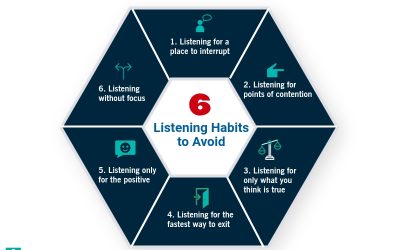
Listening skills are essential to effective leadership, yet they can be harder to develop than we realize. Many common habits interfere with our ability to truly hear others, weakening understanding and decision-making. This article highlights six common listening pitfalls. Becoming aware of these habits and reducing them can strengthen your communication, deepen relationships, and help you grow as a leader.

Why Great Leaders Can Still Make Poor Hiring Decisions
Hiring the right candidate is often more complex than it appears. Even strong, experienced leaders can find themselves making misaligned hiring decisions when certain assumptions or pressures come into play. This article explores five common hiring pitfalls and the patterns of thinking behind them—offering insight into how even effective leaders can get caught in them and how to avoid them.