FEATURED ARTICLE
The Power of Personality
Organizational Strength Starts with Individual Self-Awareness

About
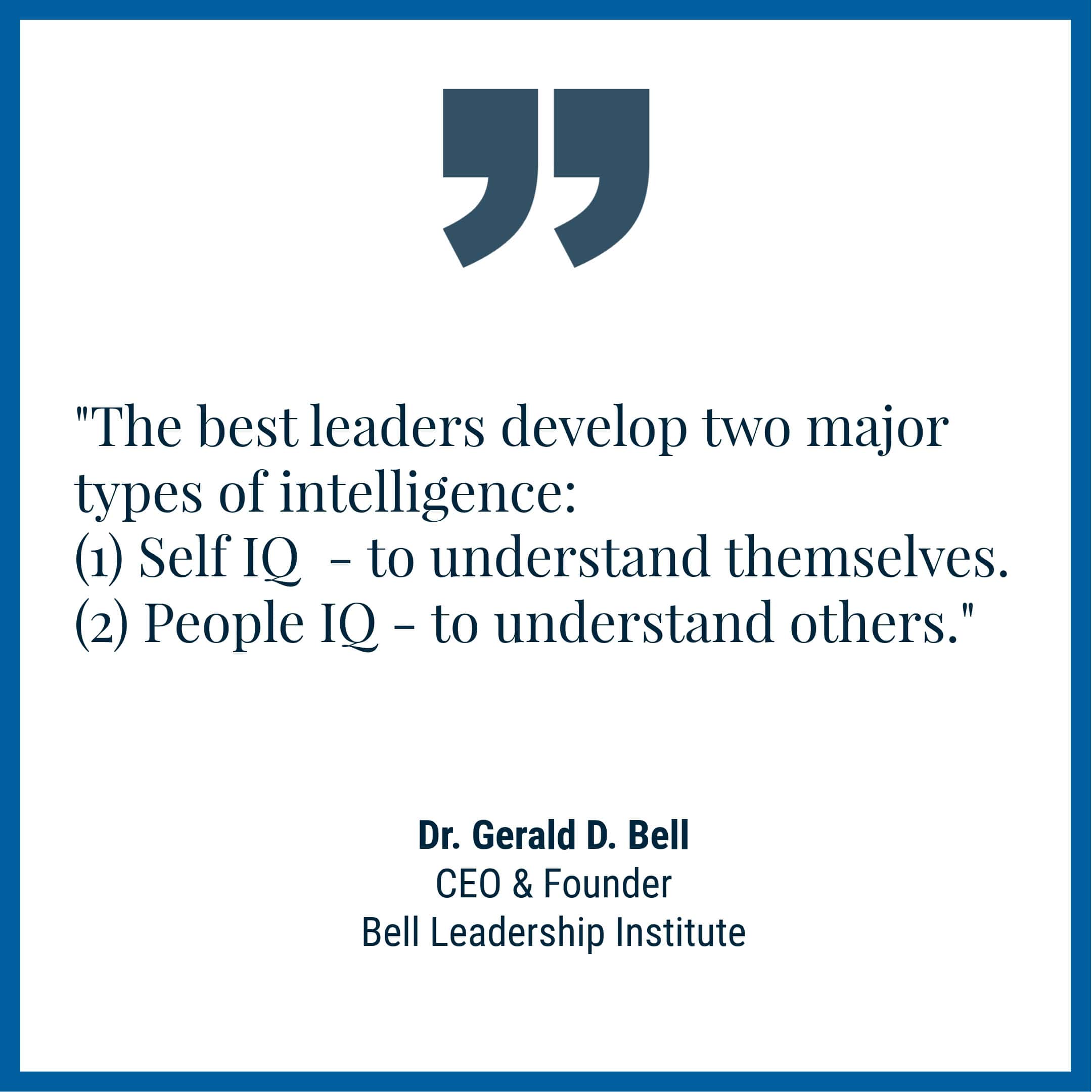
Personality plays a central role in how leaders think, act, and connect with others. While skills and experience are important, the balance of our foundational personality traits often determines how effectively we lead and collaborate. In this article, we’ll discuss the relationship between knowing ourselves (self IQ) and knowing others (people IQ) and how that translates to the effectiveness of an organization.
What is personality?
Personality is the consistent pattern of thoughts, emotions, motivations, and behaviors that shapes how we experience the world—and how others experience us. It influences how we respond under pressure, how we approach conflict, how we make decisions, and how we build relationships. While skills can be taught and knowledge can be acquired, personality forms the lens through which those skills and knowledge are expressed and perceived.
In leadership, personality is not peripheral; it is central.
Technical competence and commitment certainly matter. But over decades of research studying highly effective and ineffective leaders, Bell Leadership Institute discovered something striking: what most clearly distinguished exceptional leaders was not simply what they knew or how hard they worked, but the balance within their foundational personality traits. Those findings led to the development of the Achiever Model™, which continues to serve as the central basis for its curriculum.
At its core, the Model rests on a powerful truth: there is an ideal balance within our personalities—an attainable balance of foundational traits that allows leaders to be both effective and trusted.
The Organizational Impact of Personality Awareness
 Organizations are not abstract entities. They are collections of personalities interacting every day. If you think about a company’s culture, it is the harmony or discord of collective personalities working together as one.
When leaders cultivate both self IQ and people IQ, three organizational shifts occur:
- Teamwork strengthens. Leaders work together more intentionally and constructively, improving business outcomes.
- Conflict becomes productive. Differences are framed as perspective rather than opposition.
- Trust deepens. Teams experience leaders as consistent, authentic, and growth-oriented.
Establishing a framework for understanding each other provides a common language for this development. It recognizes that while each person’s personality is unique, foundational traits exist across all of us. When those traits are balanced, leaders operate with effectiveness and integrity. When they are overextended or underdeveloped, challenges emerge.
The goal is not uniformity. It is balance.
The Organizational Impact of Personality Awareness
Organizations are not abstract entities. They are collections of personalities interacting every day. If you think about a company’s culture, it is the harmony or discord of collective personalities working together as one.
When leaders cultivate both self IQ and people IQ, three organizational shifts occur:
- Teamwork strengthens. Leaders work together more intentionally and constructively, improving business outcomes.
- Conflict becomes productive. Differences are framed as perspective rather than opposition.
- Trust deepens. Teams experience leaders as consistent, authentic, and growth-oriented.
Establishing a framework for understanding each other provides a common language for this development. It recognizes that while each person’s personality is unique, foundational traits exist across all of us. When those traits are balanced, leaders operate with effectiveness and integrity. When they are overextended or underdeveloped, challenges emerge.
The goal is not uniformity. It is balance.
Building an Organization with a Common Language for Growth
Organizations thrive when personality awareness moves from individual insight to collective understanding.
An effective organization develops a shared language around personality—one that allows leaders and teams to talk openly about strengths, blind spots, motivations, and growth. Without that language, feedback feels personal. With it, development becomes purposeful.
A common framework helps leaders:
- Understand their own personality patterns and tendencies
- Recognize and appreciate differences in others
- Coach toward balance rather than conformity
- Align diverse strengths toward shared goals
When teams share this understanding, conversations shift. Instead of “You’re too aggressive,” the dialogue becomes, “How can we balance drive with collaboration?” Instead of “You’re resistant to change,” it becomes, “What perspective are you bringing that we need to consider?”
This shift reduces defensiveness and increases accountability. It transforms personality from a source of friction into a source of strategic advantage.
Organizations that cultivate both self IQ and people IQ do not attempt to eliminate differences. They normalize them. They understand that foundational personality traits exist in all of us, and that balanced expression of those traits leads to more trust and greater performance.
Personality is powerful.
And when understood collectively, it becomes a catalyst for sustained organizational success.
Curious how personality shapes performance?
Learn how the Bell Leadership AchieversTM program helps leaders apply personality insight to grow confidence, effectiveness, and impact. Learn more about the Achievers Program.
Recent News and Insights

TRAINER TALK / Susan Gisler
My first professional leadership role quickly taught me that coaching wasn’t just relevant—it was essential to effective leadership. I transitioned from being a front-line physical therapist to leading a diverse team in a healthcare setting, and the coaching skills I...
Guiding Principles for a Confident Interview
Every organization is composed of a range of different personalities. The workplace would be a very boring place if we were all the same! With such variety, there is bound to be some individuals whose working relationships require a little extra effort. Here are six leadership skills to build as you manage challenging personalities toward success.

TRAINER TALK / Bill Sanford
Rapid change, volatility, and increasing complexity are testing leaders in unprecedented ways. Economic uncertainty, shifting workforce expectations, technological disruption, and social fragmentation all create a pressing need for strong, steady leadership. But...